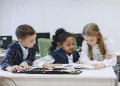
A child’s educational needs can change considerably between primary and secondary school. Younger students typically need structured routines, foundational skills and close pastoral guidance, while older students require greater independence, deeper subject knowledge and rigorous preparation for future qualifications. Choosing an institution that supports every stage of this educational journey ensures long-term success and emotional security.
Families comparing international secondary schools in Singapore should therefore carefully consider how a school responds to different stages of child development. The same principle applies when reviewing an international primary school, particularly if parents are considering a longer, seamlessly integrated educational pathway. By evaluating key aspects early on, families can feel confident in their choice.
1. Review Curriculum Continuity
Curriculum continuity can help students move from one academic stage to another with fewer disruptions and minimal anxiety. Parents should thoroughly understand how core subjects develop and expand from primary through secondary education, ensuring that concepts taught in early years build directly toward secondary learning objectives.
Ask how foundational literacy and numeracy skills are reinforced and when students begin exploring more specialised subjects, such as advanced sciences or humanities. A cohesive curriculum avoids repetitive coursework and bridges learning gaps effectively before students face formal examinations.
A clear academic progression can also help parents understand how earlier learning prepares students for later academic expectations. When a school aligns its learning outcomes across year levels, pupils build ongoing confidence and maintain continuous intellectual growth throughout their school careers.
2. Compare Teaching Approaches
Teaching methods must evolve as students mature and develop critical thinking capabilities. Primary learners frequently benefit from practical activities, group discussions, playful exploration and structured teacher guidance. In contrast, secondary students require opportunities for independent research, analytical problem-solving and self-directed study.
Ask how the school adapts teaching methods for different age groups to keep learning engaging and age-appropriate. Effective educators tailor their pedagogical approaches to suit cognitive growth, gradually shifting from scaffolded instruction to open-ended inquiry.
Parents should also consider how teachers encourage students to take increasing responsibility for their learning and organisation. Developing strong study habits, self-discipline and critical reflection early on equips pupils with essential skills needed for higher education and beyond.
3. Consider Student Wellbeing
Wellbeing remains vital throughout a child’s education, but specific pastoral support needs change significantly with age. A robust wellbeing framework ensures that emotional and social health are prioritised alongside academic achievement at every step.
Younger children often need help adjusting to school routines, forming positive friendships and regulating emotions, while teenagers may require guidance dealing with academic pressure, social dynamics or future career planning. Identifying these shifting requirements allows schools to provide targeted, empathetic assistance.
Ask who students can approach when they need assistance and how teachers communicate pastoral concerns with families. Strong home-school partnerships ensure that any personal or academic challenges are identified early and handled collaboratively in a supportive environment.
4. Review Subjects and Activities
Secondary education building on an international primary school foundation typically provides a wider range of specialist subjects, modern facilities and co-curricular activities. Parents should check when these options become available, how electives are selected, and whether pupils receive adequate guidance during the selection process.
Primary students benefit greatly from broad exposure to sports, creative arts, technology and foreign languages before deciding where their true passions and talents lie. Early exploration helps build well-rounded individuals who feel inspired to try new experiences.
A broad holistic programme gives students numerous opportunities to develop diverse interests outside traditional academic subjects. Co-curricular activities foster leadership, teamwork, resilience and personal confidence, complementing classroom learning in meaningful ways.
5. Examine Transition Support
The move from primary to secondary education represents a major milestone involving changes in schedules, campus layouts, teacher rotations and academic expectations. Thoughtfully structured transition programmes help ease this shift and reduce any accompanying stress for both pupils and parents.
Ask how the school actively prepares students for this transition through orientation days, taster sessions or mentoring schemes. If the school provides both primary and secondary stages, find out how detailed information about each student’s academic progress and learning style is shared between faculty members to maintain continuity.
Age-Stage Comparison
| Area | Primary | Secondary |
| Learning | Structured and exploratory | More specialised and independent |
| Support | Routine and pastoral guidance | Academic and wellbeing support |
| Subjects | Broad foundation | Greater subject choice |
| Assessment | Developmental feedback | Increasing academic demands |
| Independence | Gradually developed | Greater responsibility |
For parents comparing international secondary schools in Singapore, understanding how an institution adapts as students mature is essential. A high-quality international primary school establishes a strong, supportive foundation, while a robust secondary curriculum fosters personal independence, critical thinking and preparation for higher education and future global careers.
Contact Middleton International School today to discuss comprehensive educational pathways tailored for students across both primary and secondary years.